
What we do
Impact Oakland Now aims to uplift the community, focusing its work at the intersection of basic needs, community wellness, economic vitality, and long-term transformation.Our collaborative focuses on the conditions that shape everyday life for Oakland residents — including food access, housing stability, youth development, workforce pathways, health and wellness, reentry support, and neighborhood-based care. We believe that when people have access to the right support at the right time, families can stabilize, communities can heal, and neighborhoods can move from survival toward hope, fortitude, and possibility. Our work is organized around core pillars that reflect both urgent needs and long-term community priorities:
Food Security
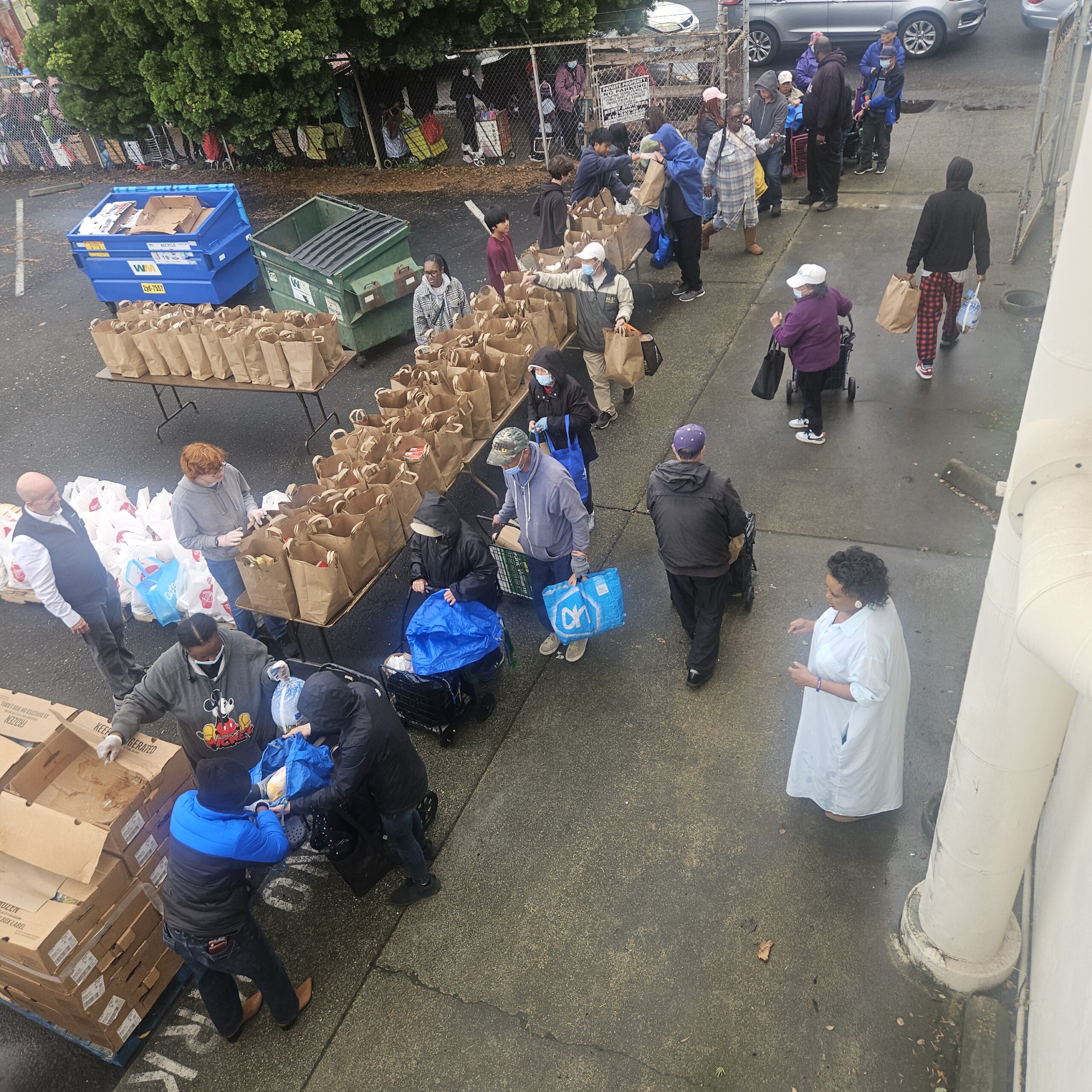
We support efforts that address hunger, food insecurity, and access to culturally relevant, healthy food for individuals and families.

Housing Stability
We work with partners to support people and households experiencing housing instability, while helping connect them to care, resources, and pathways toward stability.

Youth Development
We believe young people need safe spaces, trusted adults, leadership opportunities, mentorship, and access to programs that support their growth, identity, purpose, and future

Workforce Development
We support pathways that help community members build skills, access employment opportunities, strengthen household income, and participate in the local economy.
Health + Wellness
We recognize that health is physical, emotional, spiritual, relational, and environmental. ION supports wellness strategies that address chronic disease, trauma, behavioral health, family well-being, and access to trusted care.

Restorative Justice
We believe people impacted by the justice system deserve restoration, opportunity, and support. ION works to strengthen community-based pathways that promote healing, accountability, and reintegration.
Through these pillars, ION helps align people, churches, nonprofits, public agencies, and community partners around a shared goal: a city where every person and every neighborhood has the opportunity to thrive.
How We Do It: The ION Delivery Model
Impact Oakland Now centers the unique life experiences and needs of those who call Oakland home. Harnessing our influence as community leaders and trusted messengers, the ION collaborative’s community-centered delivery model is designed to meet real needs with dignity, care, and coordination.
We begin by listening to understand the diverse needs and barriers that Oaklanders navigate through. We pay attention to what residents, families, faith leaders, community organizations, and neighborhood partners see and experience every day. From there, we identify gaps, align resources, and mobilize our network of trusted partners to respond in practical and meaningful ways.
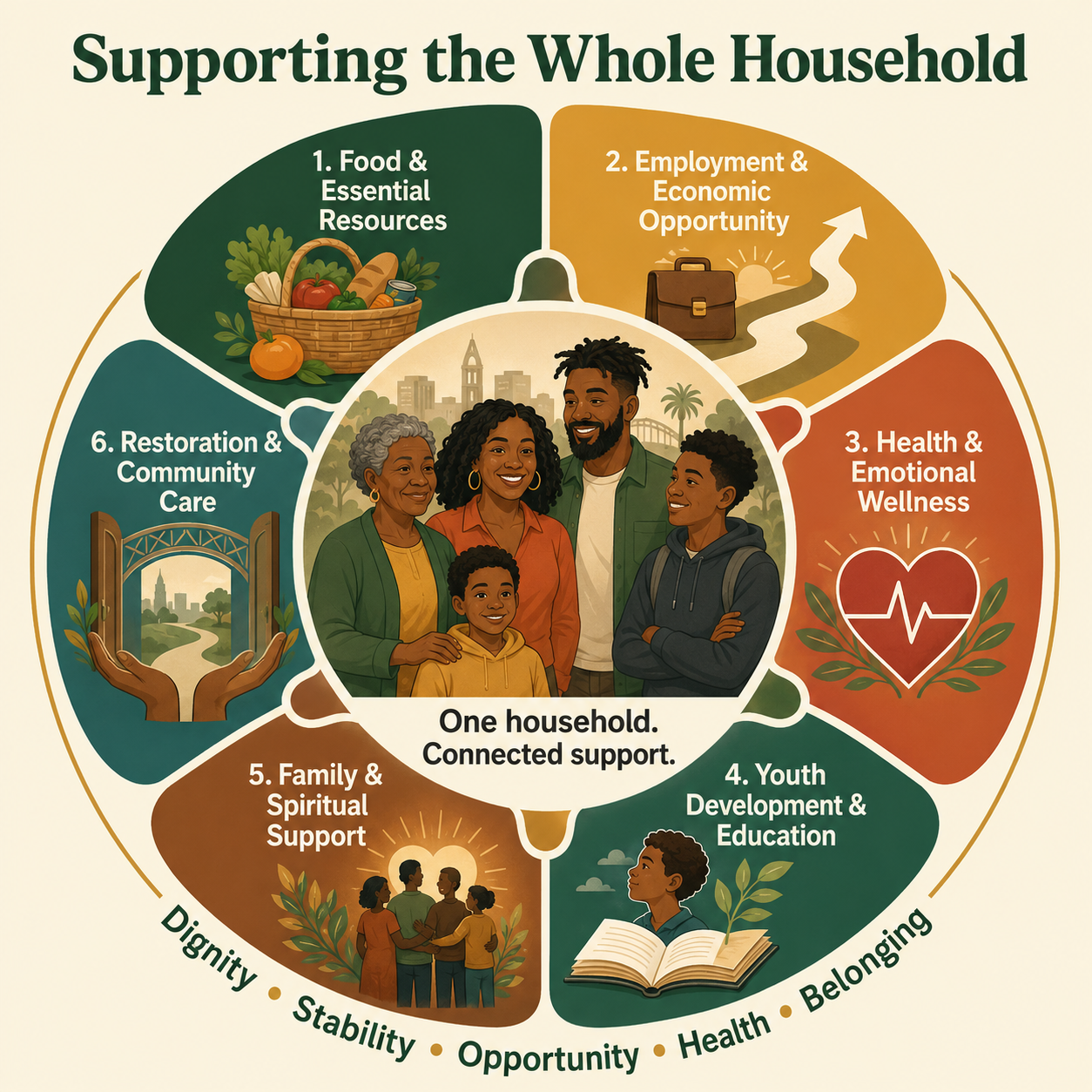
Our model is built around three key approaches:
Neighborhood Resource Saturation
We focus on bringing resources closer to the people and neighborhoods that need them most. This means moving beyond one-time services and working toward consistent, visible, trusted access to food, wellness support, youth programming, workforce connections, family resources, and care.
Whole Household Support
We understand that every household has unique needs. One family may need food and rental support. Another may need youth mentorship, job training, health navigation, or reentry support. ION’s approach is not one-size-fits-all. We help connect people to layered support that reflects the complexity of real life. When one household thrives, an entire community thrives.
Strategic Partnership & Innovation
ION brings together faith communities, nonprofits, civic leaders, service providers, funders, and community advocates to solve problems creatively and humanely. We believe innovation is not just about technology or new ideas — it is about building better systems of care that honor people’s dignity and produce meaningful change.
Our goal is not simply to respond to crisis. Our goal is to help build a city where people have the support, stability, opportunity, and hope needed to flourish. We believe Oakland’s future will be shaped by the strength of its neighborhoods, the wisdom of its community leaders, and the willingness of partners to work together differently. That is the work of Impact Oakland Now.
WHY THIS WORK MATTERS:
Oakland continues to face interconnected challenges that require coordinated, community-rooted solutions. Food insecurity, housing instability, economic inequity, community violence, health disparities, and justice-system involvement do not exist in isolation. Each can affect a resident’s ability to remain healthy, employed, safely housed and connected to opportunity.
The scope of food insecurity remains significant. The Alameda County Community Food Bank reported that one in four Alameda County residents struggled with food insecurity during its 2024 reporting period. In response to this growing need, the Food Bank and more than 400 community partners distributed a record 60 million pounds of food. The report also emphasizes that hunger is connected to such underlying issues as housing costs, education and access to health care.
Oakland also carries a disproportionate share of Alameda County’s homelessness crisis. Although Oakland’s 2026 Point-in-Time Count reflected meaningful progress—including a 19.6 percent decrease in overall homelessness and a 27 percent decrease in unsheltered homelessness since 2024—the city still accounted for 53.8 percent of Alameda County’s total homeless population and 51.2 percent of the county’s unsheltered population. The City of Oakland has acknowledged that sustaining this progress will require continued investment and coordination among city, county, regional, and community partners.
The disparities affecting Oakland’s young people are equally urgent. The Ella Baker Center for Human Rights reports that nearly one in three young people incarcerated in Alameda County are later reconvicted. Its youth-justice report also states that Black youth in Oakland are approximately 113 times more likely than white youth to be arrested for a felony. At the same time, Alameda County restorative-justice alternatives cited in the report have produced recidivism rates of approximately 5 percent among youth charged with serious or violent offenses, demonstrating the potential value of community-based and restorative approaches.
These challenges are also public-health concerns. Alameda County’s Community Health Assessment identified social determinants of health, economic stability, health care access, housing and homelessness, peaceful communities, racism and discrimination, and behavioral health and chronic conditions as the county’s priority issues. The assessment was informed by 35 focus groups conducted in seven languages, interviews with key stakeholders, analysis of more than 12 major reports, and community forums involving more than 115 participants.
These findings reinforce what ION’s faith leaders see every day: residents rarely experience only one challenge at a time. A family experiencing food insecurity may also be confronting unstable housing, unemployment, chronic illness, or barriers to transportation. A young person affected by community violence may also need behavioral-health support, educational assistance, employment opportunities, and trusted adult relationships.
Impact Oakland Now was created to respond to this interconnected reality. Through a coordinated network of churches, pastors, and community partners, ION works to connect immediate services with longer-term pathways to stability and opportunity. Its four pillars—food insecurity and basic needs; economic opportunity and workforce development; health and wellness; and community safety, justice and reentry—reflect both documented regional priorities and the lived experiences of Oakland residents.
ION’s pastors bring more than spiritual leadership to this work. They bring neighborhood knowledge, trusted relationships, facilities, volunteers, institutional history and direct experience serving residents. By combining that community-rooted expertise with credible data, coordinated programs, and public, philanthropic, and private-sector partnerships, ION can help develop solutions that are informed, accountable, and responsive to the communities most affected.
THE STATS
1 in 4
Alameda County residents struggled with food insecurity.
Source: Alameda County Community Food Bank, 2024 Annual Report
60 Million
Pounds of food were distributed by the Alameda County Community Food Bank and its partners in response to growing need.
Source: Alameda County Community Food Bank, 2024 Annual Report
53.8%
Of Alameda County’s total homeless count, 2026 Point-in-Time Count was in Oakland.
Source: City of Oakland, 2026 Point-in-Time Count announcement
Nearly 1 in 3
Young people incarcerated in Alameda County are later reconvicted.
Source: Ella Baker Center for Human Rights, Reimagining Youth Justice
113 Times
Black youth in Oakland were reported to be approximately 113 times more likely than white youth to be arrested for a felony.
Source: Ella Baker Center for Human Rights, Reimagining Youth Justice
5%
Recidivism rate reported for certain Alameda County restorative-justice alternatives serving youth charged with serious or violent offenses.
Source: Ella Baker Center for Human Rights, Reimagining Youth Justice
Sources and References
Alameda County Community Food Bank.
Annual Report 2024.
https://www.accfb.org/annual-report-2024/
City of Oakland.
Oakland Homelessness Falls Nearly 20 Percent. May 19, 2026.
https://www.oaklandca.gov/News-Releases/Oakland-Homelessness-Falls-Nearly-20-Percent
Ella Baker Center for Human Rights.
Reimagining Youth Justice: A Blueprint for Alameda County.
https://ellabakercenter.org/alameda-county/reimagining-youth-justice-a-blueprint-for-alameda-county/
Alameda County Health, Public Health Department.
Community Health Needs Assessment and Community Health Improvement Plan.
https://health.alamedacountyca.gov/community-health-needs-assessment-and-community-health-improvement-plan/